RazorsEdge
← Home

Doctrine Thinker

Squad-Level Drone Operators: What the Army's Vision for Soldier-Powered Autonomous Warfare Can Teach the Navy

Exploring how a human-centered approach to maritime autonomy could unlock new capabilities across the Navy's existing fleet

By Adam Cole

Contributing Writer

LinkedIn

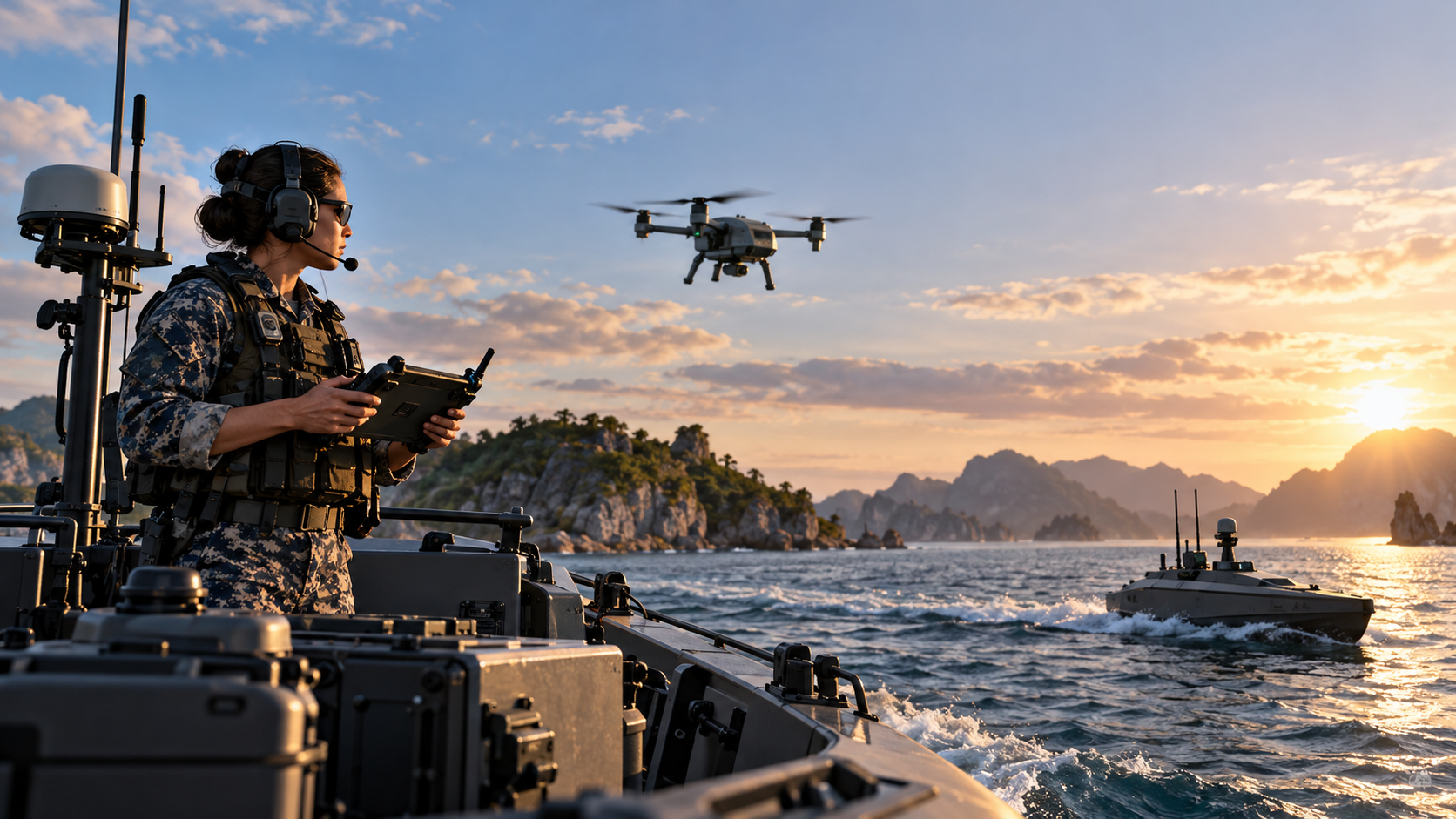
The Army is integrating drones directly into small units, enhancing capabilities like reconnaissance and combat support. The Navy could benefit from a similar approach, empowering sailors to operate drones alongside traditional duties, rather than relying solely on specialized platforms.

The Army has long organized its fighting forces around small, modular units. Squads, platoons, and companies are built to maneuver, adapt, and operate with varying degrees of independence. Now those same formations are getting drones. A year ago this month, senior Army leaders described a future where every infantryman would have a drone. Today, that vision is becoming reality. The Army has fielded thousands of drones, incorporated drone training into infantry instruction, and is working to place qualified operators at the squad level. The shift isn't simply about putting more drones on the battlefield. It's about giving soldiers new capabilities directly within their formations, from reconnaissance and surveillance to communications and combat support. What can the Navy learn from this approach? So far, much of the Navy's approach to maritime autonomy has focused on developing unmanned platforms capable of operating independently across vast distances. From small unmanned surface vessels to the latest Medium Unmanned Surface Vessel (MUSV) program, the Navy is exploring how autonomous craft can extend the fleet's reach, provide surveillance, and support combat operations. These are important advances. But they also raise a fundamental question: Where does the sailor fit into this future? Unlike the Army's push to place drone operators directly within small fighting units, the Navy has largely organized its maritime autonomous capabilities around specialized platforms and unmanned vessel squadrons. While the Navy is developing new command-and-control capabilities and training specialists, there is an opportunity to think more broadly about how ordinary shipboard crews could employ drones themselves. What if the Navy approached autonomy not just as a new class of vessel, but as a capability that sailors routinely operate alongside their traditional responsibilities? Picture this. Just as a ship's armory holds rifles and other force-protection equipment, imagine it also holds a complement of drones. Sailors trained to operate them could stand a regular eight-hour watch, flying drones to provide intelligence, surveillance, and reconnaissance (ISR) and support basic ship protection. What's more, a ship could deploy aerial, surface, and subsurface drones simultaneously, all operated or supervised by sailors aboard the vessel. Rather than relying exclusively on distant command centers or independent autonomous operations, these systems could work together under human direction. Admittedly, this approach has limitations. A Navy ship cannot always operate close enough to an adversary's coastline for smaller drones to reach contested areas. But within their operating range, these systems could significantly extend a ship's eyes and ears, providing persistent surveillance, early warning, and additional force protection—all under the control of sailors aboard the ship. The Navy's current push toward autonomous vessels addresses the challenge of operating at greater distances. But a sailor-centered approach could dramatically expand capability in the here and now, leveraging existing ships, crews, and infrastructure. And perhaps that's the lesson from the Army: autonomy isn't just about what unmanned platforms can accomplish independently. It's about what trained people can accomplish when those capabilities are placed directly in their hands.

About the author

Adam is a defense acquisition professional with a background in strategic communications and naval programs. He writes about emerging defense technologies, autonomy, and the intersection of government, industry, and investment—with a focus on what it takes to move promising capabilities into operational reality.

Doctrine Dialogue