RazorsEdge
← Home

Doctrine Thinker

The Next Drone Threat May Be Underwater

As adversaries expand their undersea autonomous capabilities, counter-UUV defenses must match that pace

By Adam Cole

Contributing Writer

LinkedIn

As adversaries develop unmanned underwater vehicles, the threat to naval bases and critical infrastructure grows. The Navy must accelerate its counter-UUV efforts to keep pace.

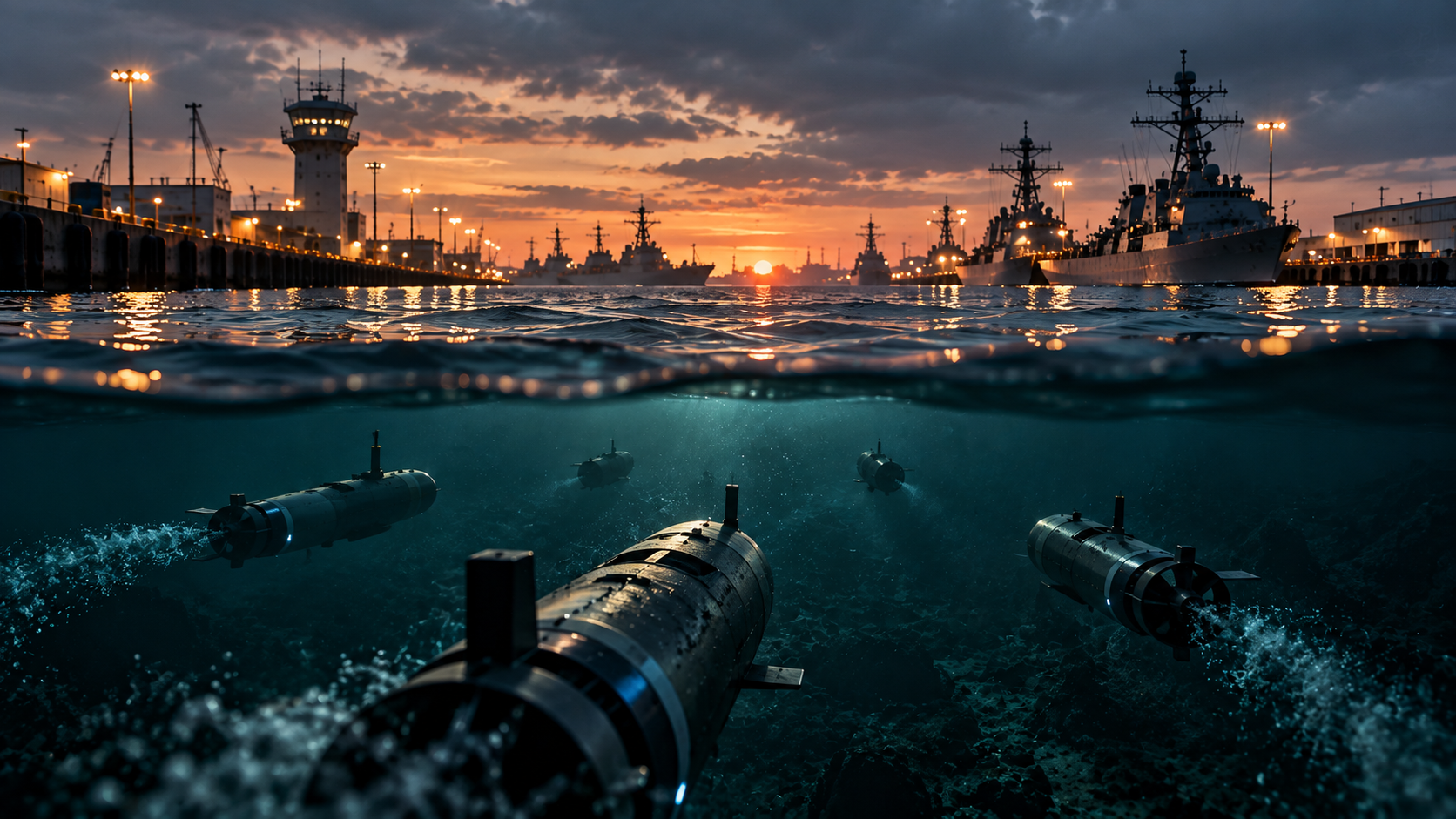
We've spent years watching drones change the battlefield above us. But what happens when the next wave comes from below? Imagine an adversary sending relatively inexpensive autonomous underwater vehicles toward a naval base, a busy port, or the cables and pipelines we depend on. No crew to risk. No need to bring every vehicle home. That's a different kind of threat. And it's one we need to take seriously. China has invested heavily in unmanned underwater systems, while Russia has pursued the much larger nuclear-powered Poseidon underwater weapon. Iran has also explored unmanned maritime capabilities. These aren't all the same technologies, and they aren't necessarily cheap or expendable. But they point toward growing interest in operating without crews beneath the surface. Here's the bigger question: What are we doing to counter them? The good news is we're not starting from zero. The Navy has made real progress with unmanned maritime systems, including Knifefish and the deployment of unmanned mine-countermeasures capabilities. These programs demonstrate that we're moving beyond experimentation and putting unmanned technology into the fleet. But countering adversary underwater drones presents a different challenge. Underwater drones aren't simply flying drones with propellers swapped for fins. Communications are difficult. Navigation is harder. Detecting and classifying small objects underwater presents an entirely different problem. Then there's the economics. If an adversary can repeatedly deploy relatively inexpensive underwater vehicles, how much can we afford to spend responding to each one? And how do we protect our bases, ships, and critical infrastructure without tying up expensive naval assets? As China, Russia, and Iran continue developing unmanned maritime capabilities, we need to build on our progress and accelerate counter-UUV experimentation. That means getting more prototypes into the water, testing them against realistic threats, and working with industry to determine what can be fielded at scale. Not every experiment will succeed. That's the point of experimentation. This moment calls for bringing together the Navy's existing undersea expertise, operational experimentation, and industry's growing autonomous capabilities. We need to understand what works today, where the gaps remain, and how to turn promising technologies into credible defenses. The Navy has already demonstrated what maritime autonomy can do. Now we need to accelerate the capabilities that defend against it.

About the author

Adam is a defense acquisition professional with a background in strategic communications and naval programs. He writes about emerging defense technologies, autonomy, and the intersection of government, industry, and investment—with a focus on what it takes to move promising capabilities into operational reality.

Doctrine Dialogue